Feb 17, 2026

Insulation and its enemy: partial discharge

  • Article

Insulation plays a vital role in medium- and high-voltage electrical equipment, including transformers, cables and switchgear. It comes in solid, liquid and gaseous forms. Common insulating materials include air, sulfur hexafluoride (SF6), kraft paper, cross-linked polyethylene (XLPE), mineral oil and synthetic esters.

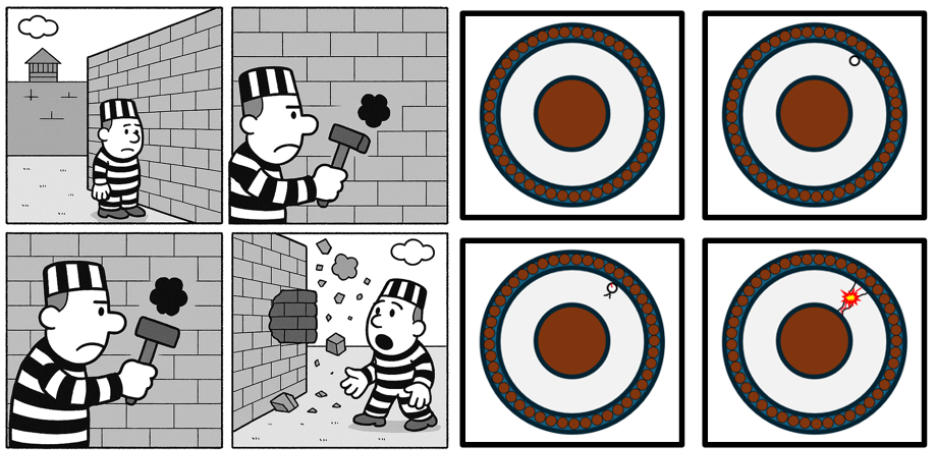
The main role of insulation in high-voltage equipment is to serve as a barrier that prevents electric current from escaping along unintended paths, much like a prison wall helps keep inmates from breaking out. This critical barrier ensures equipment operates safely and reliably.

Like prison walls, insulation separates high- and low-potential regions. When these “walls” fail, current escapes through unintended paths, like an escaping prisoner, often causing short circuits and arcing that seriously disrupt equipment operation.

  1. Who’s the culprit?

    Partial discharge (PD) is a frequent cause of insulation failure. It occurs when a strong electric field ionizes the medium and produces small sparks. PD can develop inside insulation or along its surfaces and interfaces.

    Each PD causes chemical changes and can alter the insulation’s molecular structure. Some changes are reversible, but repeated high-energy discharges degrade the dielectric material over time. Using the prison analogy, a prisoner hitting the wall once does little damage, but repeated or multiple hits at once can cause significant harm.

    As PDs weaken insulation, adjacent areas may also begin to deteriorate, potentially leading to larger PDs with greater impact. Eventually, this process can cause complete insulation breakdown. Just as a small crack in a prison wall can grow into a hole and allow a prisoner to escape, repeated stress can lead to complete collapse—an outcome no one wants.

  2. Insulation ages naturally over time, making it more vulnerable to degradation. However, detecting early signs of deterioration helps manage its impact and informs future planning. In the prison wall analogy, the outcome would have been different if regular inspections had been carried out using appropriate methods. Patrolling the wall, rather than only watching from the tower, would reveal minor issues such as holes or weak spots sooner, potentially preventing escapes. Even if a hole can’t be repaired immediately, that section could be rebuilt. The same principle applies to insulation maintenance.

  3. How to spot trouble before it gets worse

    An online or offline PD measurement can help detect PDs within the insulation system. It identifies micro defects in the insulation, whereas other tests, such as voltage withstand tests, assess the overall condition of the insulation system. PDs can also be localized. Certain types of insulation are better at tolerating PDs, while others are not. Equipment classes have specific PD level requirements, such as 5 pC for insulated power cables or 250 pC for power transformers.

    PD inception and extinction voltages are critical factors. They help determine whether PDs will occur during operation and whether they will stop on their own if the extinction voltage is greater than the operating voltage. If not, PDs will remain active, gradually degrading the insulation and eventually causing insulation breakdown and equipment failure.

  4. How bad could it be?

    Failure often strikes unexpectedly, causing major collateral damage and production losses. Extensive repairs can lead to long outages. However, scheduling an outage to perform PD measurement and assessment can help asset managers estimate an asset’s remaining service life, plan maintenance or replacement, as needed, and minimize total downtime.

    If you want to learn more about how PD measurement can help you manage your medium-voltage and high-voltage assets, feel free to contact one of our experts today!

This content is for general information purposes only. All rights reserved ©BBA

Latest publications
See all