---
title: A procedural overview of urban or sensitive-area blasting practices
date: 2021-02-08T13:19:00-05:00
author: jessica napert
canonical_url: "https://www.bbaconsultants.com/en-ca/publications/a-procedural-overview-of-urban-or-sensitive-area-blasting-practices"
section: Publications
---
In the mining and construction sectors, the drilling and blasting process is typically considered the most efficient and cost-effective way to fragment rock. Despite this, the same mechanisms that render this process highly efficient can also result in unwanted impacts on surface and underground infrastructures, the environment and local communities.


1. Such impacts are generally the result of errant ground vibrations and air overpressure waves generated by the detonation process. If left unchecked, such disturbances can lead to complaints, damages and other avoidable events. This is especially true when projects are in close proximity to or carried out in urban settings.
    
    This blog article will present the best practices required to successfully carry out blasting operations in sensitive environments.
    
    ## Steps for establishing blasting criteria and readiness in sensitive areas
    
    Implementing blasting practices in proximity to sensitive environments is a multi-step process requiring stringent planning and analytical and monitoring components. An overview of the primary steps applied by BBA’s drilling and blasting experts is presented in detail below:
    
    ### Prior to blasting
    
    
    - **Map all critical surface and underground infrastructures** and equipment or components within these infrastructures that may have an increased sensitivity to vibrations.
    - **Plan and execute pre-blasting visual surveys or inspections** of all critical infrastructures in proximity to the blasting activity. This makes it possible to identify possible structural flaws or weaknesses that could be aggravated under blasting-induced dynamic loading conditions.
    - **Consult local regulatory standards for vibration and air-overpressure thresholds**, which often differ depending on the type of infrastructure or residing equipment.
    - **Establish a clear, concise and informative communication plan with stakeholders** who may be impacted by the sensory disturbances often associated with blasting events. Such a plan often has the effect of fostering the project’s social acceptability.
    - **Develop an instrumentation and monitoring plan** consisting of both fixed and mobile monitoring devices, including seismographs for vibration and air overpressure monitoring, static or dynamic extensometers and crack meters, and temperature gauges.
    - **Design a blasting plan based on critical distances and established vibration limits.** At this stage, the maximum allowable charge per delay is typically determined based on the distance of sensitive receptors to the projected blasting activities and standard site attenuation constants for vibrations and air overpressure.
    
    Including BBA’s team of experts to support the pre-blast process provides significant added value to the front-end planning phases of the project by minimizing delays often linked to permitting, technical challenges and overall social acceptance criteria often encountered when blasting in urban environments. The BBA team works actively with its clients to establish conventional and non-conventional blasting methods that are adapted, optimized and comply with existing regulations.
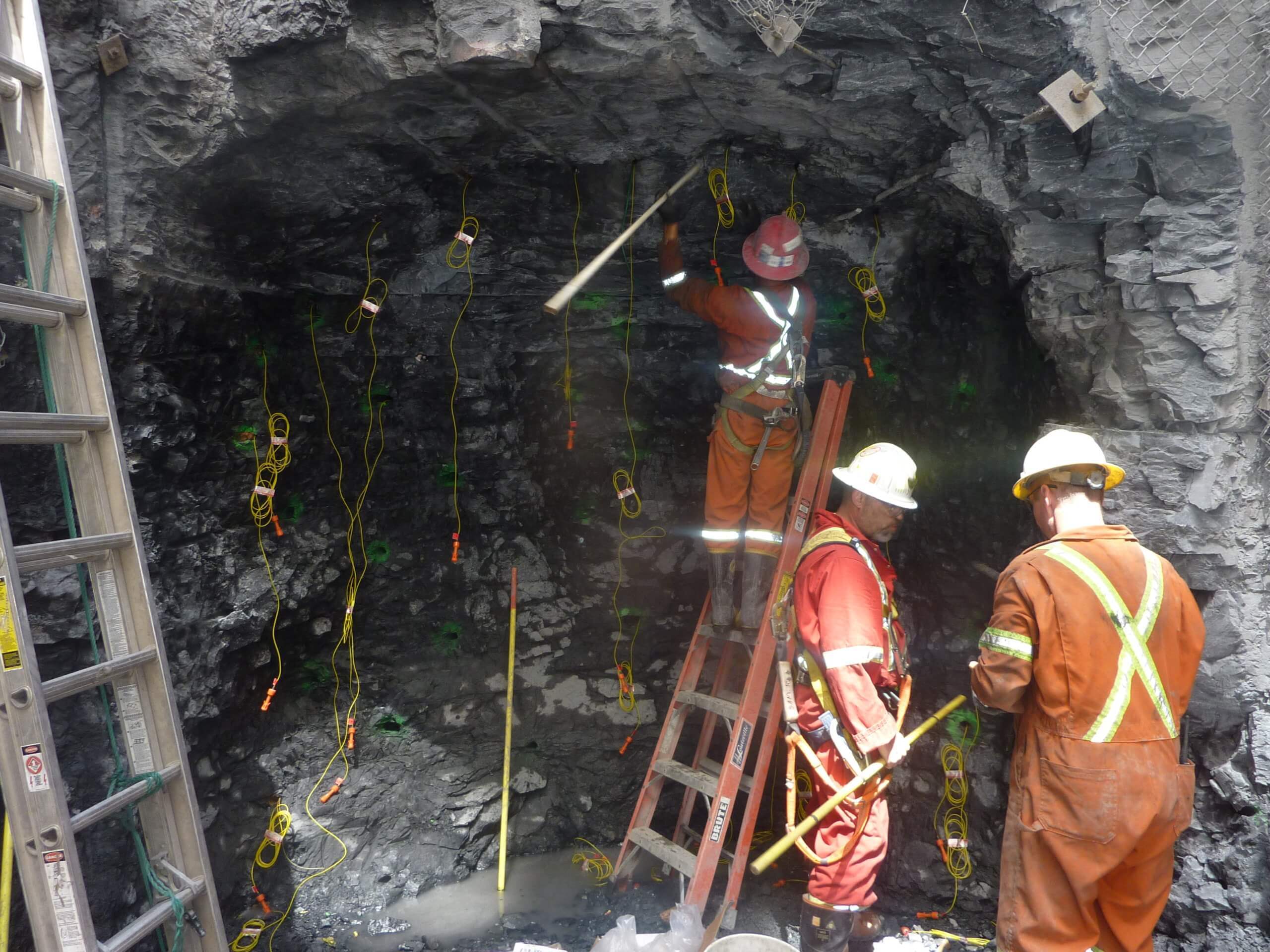
2. [  ![Blog Body Image R Delbosco Urban Blasting EN 1](https://www.assets.bbaconsultants.com/bba-production-assets/production/images/Publications/Blog-Body-Image-RDelbosco-Urban-Blasting_EN_1.jpg) Figure 1 – Inverse raise-blasting in proximity to sensitive receptors (Montréal Neurological Institute)  ](https://www.assets.bbaconsultants.com/bba-production-assets/production/images/Publications/Blog-Body-Image-RDelbosco-Urban-Blasting_EN_1.jpg)
3. ### During blasting
    
    
    - **Implement drilling and loading quality assurance and quality control (QA/QC) processes**, ensuring the work plan, blast design and initiation sequence are properly implemented.
    - For more complex blasting applications, **provide field-based technical assistance and instructions to the blaster-in-charge** and his or her team to highlight design particularities and clarify any questions regarding the work plan.
    - **Ensure all required monitoring equipment**, including seismographs, crack meters, extensometers, and cameras, are deployed, installed and function properly.
    - **Ensure all blasting protection devices** (blasting mats, geotextile, etc.) comply with the supplied specifications and are adapted to the field conditions.
    - **Address and document any unforeseen or upcoming challenges of implementing the plans in the field**. Adjustments to the drill and blast plans may be required on certain occasions due to changing bedrock conditions or other operational constraints. By proactively identifying these elements, a plan review process can be implemented quickly to prevent any delays or complications.
    
    ### Post blasting
    
    
    - **Measure whether the results obtained match the expected outcome.** Adjust and review the plan accordingly for subsequent blasting activities.
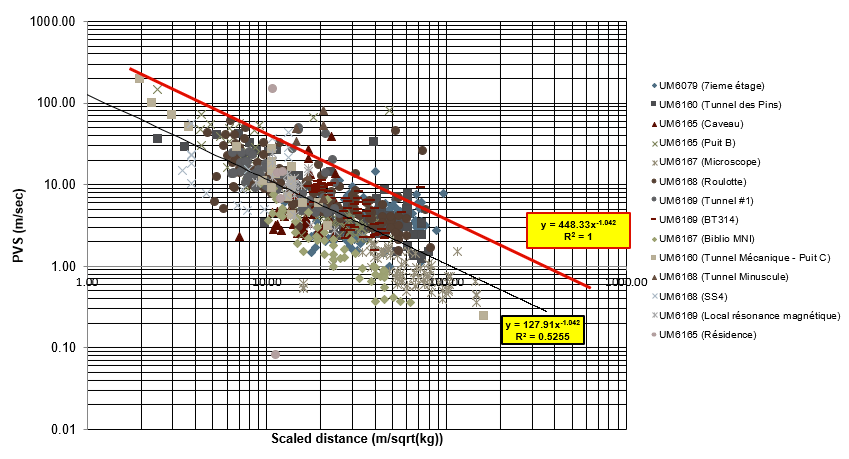
    - **Analyze monitored vibration and air overpressure data streams to ensure results are within allowable regulatory limits.** The review of seismic records originating from blasting events can reveal underlying issues that, although oftentimes subtle, can significantly impact blasting dynamics and performance.
    - **Manage and address complaints or concerns that may arise following blasting events.** Despite precautions, structural responses from blasting vibrations can vary from one structure to the next, the same way tolerances and perceptions can vary from person to person.
    - **Carry out post-blasting visual inspections and assessments of neighbouring structures.** Generally performed after the project is completed, the aim of post-inspections is to validate that blasting activities have not prompted new or additional damages to affected infrastructures.
    
    When blasting operations have been completed, a post-blast technical report reviewing any findings, implemented changes to the designs and data analyses and compilations should be available for future reference.
4. [  ![Blog Body Image R Delbosco Urban Blasting EN 2](https://www.assets.bbaconsultants.com/bba-production-assets/production/images/Publications/Blog-Body-Image-RDelbosco-Urban-Blasting_EN_2.png) Figure 2 – Typical blast vibration point-cloud and regression analysis (compiled by monitoring location)  ](https://www.assets.bbaconsultants.com/bba-production-assets/production/images/Publications/Blog-Body-Image-RDelbosco-Urban-Blasting_EN_2.png)
5. ## Keys to successful blasting
    
    Successfully undertaking blasting operations in sensitive environments requires a systematic and structured approach applicable from the planning stage throughout project execution and close-out. BBA’s drilling and blasting experts are available to support you with the necessary steps required to render blasting in sensitive areas as seamless and productive as possible.
    
    If you have any questions or want to learn more, feel free to contact us.
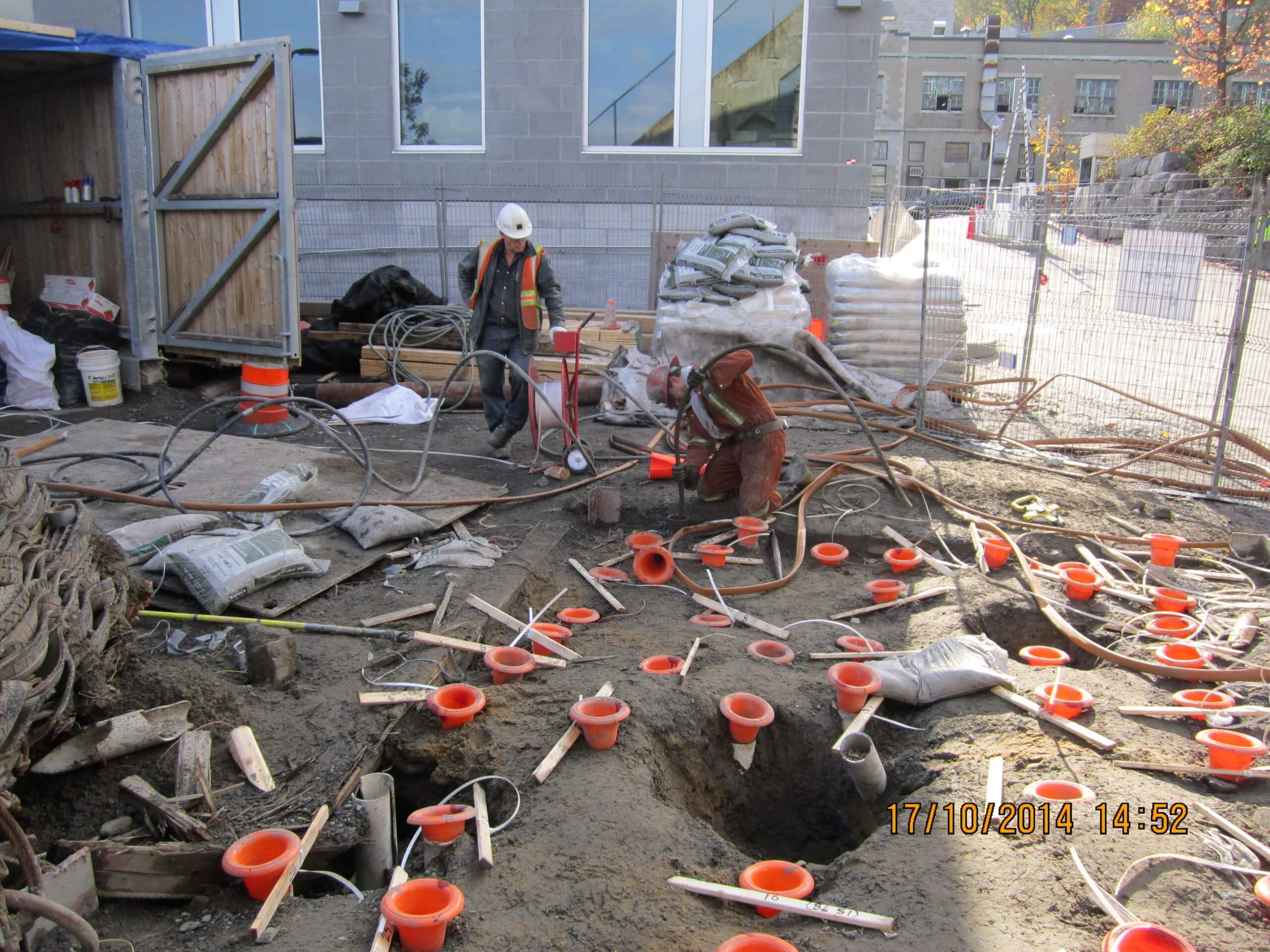
6. [  ![Blog Body Image R Delbosco Urban Blasting EN 3](https://www.assets.bbaconsultants.com/bba-production-assets/production/images/Publications/Blog-Body-Image-RDelbosco-Urban-Blasting_EN_3.jpg)  ](https://www.assets.bbaconsultants.com/bba-production-assets/production/images/Publications/Blog-Body-Image-RDelbosco-Urban-Blasting_EN_3.jpg)
 
This content is for general information purposes only. All rights reserved ©BBA


    1. ![Mm employee men riccardo del bosco retouch web SQ LR BBA](https://www.assets.bbaconsultants.com/bba-production-assets/production/images/avatars/_size_avatar/204273/mm_employee_men_riccardo-del-bosco_retouch_web_SQ_LR_BBA.webp)   
    
     Riccardo Del Bosco, P.Eng.
    
    Senior Engineer, Mining and Geology
    
         Read bio   [  ](https://www.linkedin.com/in/riccardo-ldb/)  **With over 15 years of expertise in drilling and blasting, Riccardo Del Bosco helps turn mining challenges into reliable solutions,** ensuring safety, efficiency and optimized investment.
    
    **Key expertise and certifications**
    
    
    - Design and assessment of drilling and blasting parameters, including environmental impacts
    - Blast modelling and optimization (I-Blast, AEGIS, Deswik, etc.)
    - Technical and operational audits and mining project management
    - Evaluation and design of explosive storage sites and fragmentation studies (“Mine-to-Mill” initiatives)
    - Member of OIQ, PEO, SEEQ, ISEE
    
    **Major achievements:** Completed over 50 drilling and blasting projects for open-pit and underground mines, hydroelectric infrastructure, and construction and civil engineering projects requiring controlled fragmentation.
    
    **Approach and added value:** Riccardo combines technical expertise with operational insight to secure investments and integrate innovative solutions for fragmentation and environmental impact reduction.


    - [  27 Jul 2026 Mining and Metals  


     Early tailings decisions shape long-term mine performance 


    - ![Geraldine Cosset](https://www.assets.bbaconsultants.com/bba-production-assets/production/images/avatars/_size_avatar/206707/Geraldine-Cosset.webp)
    - ![Jared Purdy](https://www.assets.bbaconsultants.com/bba-production-assets/production/images/avatars/_size_avatar/212424/Jared-Purdy.webp)


      ](https://www.bbaconsultants.com/en-ca/insights/early-tailings-decisions-shape-long-term-mine-performance "Early tailings decisions shape long-term mine performance")
- [  02 Jul 2026 Mining and Metals  


     Python: A key tool for data analysis in mineral processing 


    - ![Charles Blais](https://www.assets.bbaconsultants.com/bba-production-assets/production/images/avatars/_size_avatar/211197/Charles-Blais.webp)
    - ![Juan Pablo Vergara](https://www.assets.bbaconsultants.com/bba-production-assets/production/images/avatars/_size_avatar/211266/Juan-Pablo-Vergara.webp)


      ](https://www.bbaconsultants.com/en-ca/insights/python-a-key-tool-for-data-analysis-in-mineral-processing "Python: A key tool for data analysis in mineral processing")
- [  19 Jun 2026 Mining and Metals  


     Speed is earned early in projects 


    - ![Mm employee men jean lheureux retouch web SQ LR BBA](https://www.assets.bbaconsultants.com/bba-production-assets/production/images/avatars/_size_avatar/204266/mm_employee_men_jean-lheureux_retouch_web_SQ_LR_BBA.webp)
    - ![Mm employee men benoit richard retouch web SQ LR BBA](https://www.assets.bbaconsultants.com/bba-production-assets/production/images/avatars/_size_avatar/203602/mm_employee_men_benoit-richard_retouch_web_SQ_LR_BBA.webp)


      ](https://www.bbaconsultants.com/en-ca/insights/speed-is-earned-early-in-projects "Speed is earned early in projects")
- [  17 Jun 2026 
    
     Industrial data platforms: building a solid foundation to optimize your operations 


    - ![Pierre Boucher](https://www.assets.bbaconsultants.com/bba-production-assets/production/images/avatars/_size_avatar/2671/Pierre-Boucher.webp)   
        
         Pierre Boucher, P.Eng.
        
        Senior Engineer, Operational Technology and Infrastructure


      ](https://www.bbaconsultants.com/en-ca/insights/industrial-data-platforms-building-a-solid-foundation-to-optimize-your-operations "Industrial data platforms: building a solid foundation to optimize your operations")


 [ See all 

 ](https://www.bbaconsultants.com/en-ca/insights "Go to Publications listing page") 


 Let’s  
think it further  
together [ Contact us    

 ](https://www.bbaconsultants.com/en-ca/contact) 


  In the mining and construction sectors, the drilling and blasting process is typically considered the most efficient and cost-effective way to fragment rock. Despite this, the same mechanisms that render this process highly efficient can also result in unwanted impacts on surface and underground infrastructures, the environment and local communities.


1. Such impacts are generally the result of errant ground vibrations and air overpressure waves generated by the detonation process. If left unchecked, such disturbances can lead to complaints, damages and other avoidable events. This is especially true when projects are in close proximity to or carried out in urban settings.
    
    This blog article will present the best practices required to successfully carry out blasting operations in sensitive environments.
    
    ## Steps for establishing blasting criteria and readiness in sensitive areas
    
    Implementing blasting practices in proximity to sensitive environments is a multi-step process requiring stringent planning and analytical and monitoring components. An overview of the primary steps applied by BBA’s drilling and blasting experts is presented in detail below:
    
    ### Prior to blasting
    
    
    - **Map all critical surface and underground infrastructures** and equipment or components within these infrastructures that may have an increased sensitivity to vibrations.
    - **Plan and execute pre-blasting visual surveys or inspections** of all critical infrastructures in proximity to the blasting activity. This makes it possible to identify possible structural flaws or weaknesses that could be aggravated under blasting-induced dynamic loading conditions.
    - **Consult local regulatory standards for vibration and air-overpressure thresholds**, which often differ depending on the type of infrastructure or residing equipment.
    - **Establish a clear, concise and informative communication plan with stakeholders** who may be impacted by the sensory disturbances often associated with blasting events. Such a plan often has the effect of fostering the project’s social acceptability.
    - **Develop an instrumentation and monitoring plan** consisting of both fixed and mobile monitoring devices, including seismographs for vibration and air overpressure monitoring, static or dynamic extensometers and crack meters, and temperature gauges.
    - **Design a blasting plan based on critical distances and established vibration limits.** At this stage, the maximum allowable charge per delay is typically determined based on the distance of sensitive receptors to the projected blasting activities and standard site attenuation constants for vibrations and air overpressure.
    
    Including BBA’s team of experts to support the pre-blast process provides significant added value to the front-end planning phases of the project by minimizing delays often linked to permitting, technical challenges and overall social acceptance criteria often encountered when blasting in urban environments. The BBA team works actively with its clients to establish conventional and non-conventional blasting methods that are adapted, optimized and comply with existing regulations.
2. [  ![Blog Body Image R Delbosco Urban Blasting EN 1](https://www.assets.bbaconsultants.com/bba-production-assets/production/images/Publications/Blog-Body-Image-RDelbosco-Urban-Blasting_EN_1.jpg) Figure 1 – Inverse raise-blasting in proximity to sensitive receptors (Montréal Neurological Institute)  ](https://www.assets.bbaconsultants.com/bba-production-assets/production/images/Publications/Blog-Body-Image-RDelbosco-Urban-Blasting_EN_1.jpg)
3. ### During blasting
    
    
    - **Implement drilling and loading quality assurance and quality control (QA/QC) processes**, ensuring the work plan, blast design and initiation sequence are properly implemented.
    - For more complex blasting applications, **provide field-based technical assistance and instructions to the blaster-in-charge** and his or her team to highlight design particularities and clarify any questions regarding the work plan.
    - **Ensure all required monitoring equipment**, including seismographs, crack meters, extensometers, and cameras, are deployed, installed and function properly.
    - **Ensure all blasting protection devices** (blasting mats, geotextile, etc.) comply with the supplied specifications and are adapted to the field conditions.
    - **Address and document any unforeseen or upcoming challenges of implementing the plans in the field**. Adjustments to the drill and blast plans may be required on certain occasions due to changing bedrock conditions or other operational constraints. By proactively identifying these elements, a plan review process can be implemented quickly to prevent any delays or complications.
    
    ### Post blasting
    
    
    - **Measure whether the results obtained match the expected outcome.** Adjust and review the plan accordingly for subsequent blasting activities.
    - **Analyze monitored vibration and air overpressure data streams to ensure results are within allowable regulatory limits.** The review of seismic records originating from blasting events can reveal underlying issues that, although oftentimes subtle, can significantly impact blasting dynamics and performance.
    - **Manage and address complaints or concerns that may arise following blasting events.** Despite precautions, structural responses from blasting vibrations can vary from one structure to the next, the same way tolerances and perceptions can vary from person to person.
    - **Carry out post-blasting visual inspections and assessments of neighbouring structures.** Generally performed after the project is completed, the aim of post-inspections is to validate that blasting activities have not prompted new or additional damages to affected infrastructures.
    
    When blasting operations have been completed, a post-blast technical report reviewing any findings, implemented changes to the designs and data analyses and compilations should be available for future reference.
4. [  ![Blog Body Image R Delbosco Urban Blasting EN 2](https://www.assets.bbaconsultants.com/bba-production-assets/production/images/Publications/Blog-Body-Image-RDelbosco-Urban-Blasting_EN_2.png) Figure 2 – Typical blast vibration point-cloud and regression analysis (compiled by monitoring location)  ](https://www.assets.bbaconsultants.com/bba-production-assets/production/images/Publications/Blog-Body-Image-RDelbosco-Urban-Blasting_EN_2.png)
5. ## Keys to successful blasting
    
    Successfully undertaking blasting operations in sensitive environments requires a systematic and structured approach applicable from the planning stage throughout project execution and close-out. BBA’s drilling and blasting experts are available to support you with the necessary steps required to render blasting in sensitive areas as seamless and productive as possible.
    
    If you have any questions or want to learn more, feel free to contact us.
6. [  ![Blog Body Image R Delbosco Urban Blasting EN 3](https://www.assets.bbaconsultants.com/bba-production-assets/production/images/Publications/Blog-Body-Image-RDelbosco-Urban-Blasting_EN_3.jpg)  ](https://www.assets.bbaconsultants.com/bba-production-assets/production/images/Publications/Blog-Body-Image-RDelbosco-Urban-Blasting_EN_3.jpg)
 
This content is for general information purposes only. All rights reserved ©BBA