---
title: Challenges to open pit mining through historic underground workings
date: 2021-12-07T15:48:00-05:00
author: jessica napert
canonical_url: "https://www.bbaconsultants.com/en-ca/publications/challenges-to-open-pit-mining-through-historic-underground-workings"
section: Publications
---
Mining operators are increasingly looking into developing large open pits down through old, abandoned underground workings to extract remnant ore left within pillar zones. However, maintaining pit wall stability while mining through a large network of underground mine workings isn’t easy and has its risks that can significantly impact overall pit economics and viability.


1. The interactions between the stopes and pit walls may present operational challenges, requiring pit wall redesign, ground support installation and operational rescheduling. Anticipated interactions of the pit shell with the mine workings must also be closely evaluated to maintain a safe working environment.
    
    ## Open pit interaction with underground mine workings
    
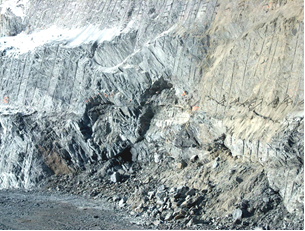
    The interaction of the pit with previously mined stopes presents a challenge to stability design in the walls and pit floor. An example of stope exposure in the pit wall is provided in Figure 1.
2. [  ![In blog image J Henning 1](https://www.assets.bbaconsultants.com/bba-production-assets/production/images/Publications/In-blog-image_JHenning_1.png) Figure 1. Pit wall undercut by stope  ](https://www.assets.bbaconsultants.com/bba-production-assets/production/images/Publications/In-blog-image_JHenning_1.png)
3. Stopes are assessed on a case-by-case basis, with special attention given to those that may impact the pit ramp or catch benches due to their location, dimensions or compromised rock mass stability. In addition, the exact position of individual stopes may be unknown due to incomplete mine records.
    
    ## Defining voids
    
    Voids are identified and defined using a variety of sources, including historic mine plans and sections, stope records and probe drilling. Where conditions permit, larger voids are surveyed using a borehole scanner.
    
    Voids fall into three categories:
    
    
    1. Stopes and lateral or vertical mine development that will daylight or lie adjacent to the designed open pit highwall. The stability of these problematic stopes is assessed using a range of techniques including kinematic analyses, analyses of potential support demand and numerical modelling to evaluate overall stability interaction issues.
    2. Mine workings that will be intercepted by the advancing pit floor. Based on proximity to voids, the pit floor can be subdivided into non-restricted, cautionary and restricted areas to ensure personnel safety.
    3. Stopes and mine workings that lie well beyond (30 m+) the ultimate pit shell design.
    
    ## Stability design tactics
    
    Ground support or pit geometry re-design is used to establish stable wall conditions when near or intercepting historic mine workings.
    
    ### Ground support
    
    Ground support measures include:
    
    
    - Rock mass is reinforced with cable bolting or rock bolting.
    - Surface cover is used by draping screening over the wall to mitigate rock fall risk at locations where catch bench geometry has been compromised.
    - Backfill exposures are stabilized by replacing existing unconsolidated fill (typically fines or sand) with a cover of waste rock, allowing a steeper angle of repose.
    - Voids are backfilled in advance of pit mining. Depending on proximity to the ultimate pit shell, unconsolidated or consolidated backfill is used.
    - A minimum pillar dimension requirement is maintained above voids, with undersized sill pillars blasted down. In the case of large open stopes, drop raises may be used to fill the underlying void with broken waste muck prior to blasting down the sill.
    
    ### Pit wall geometry redesign
    
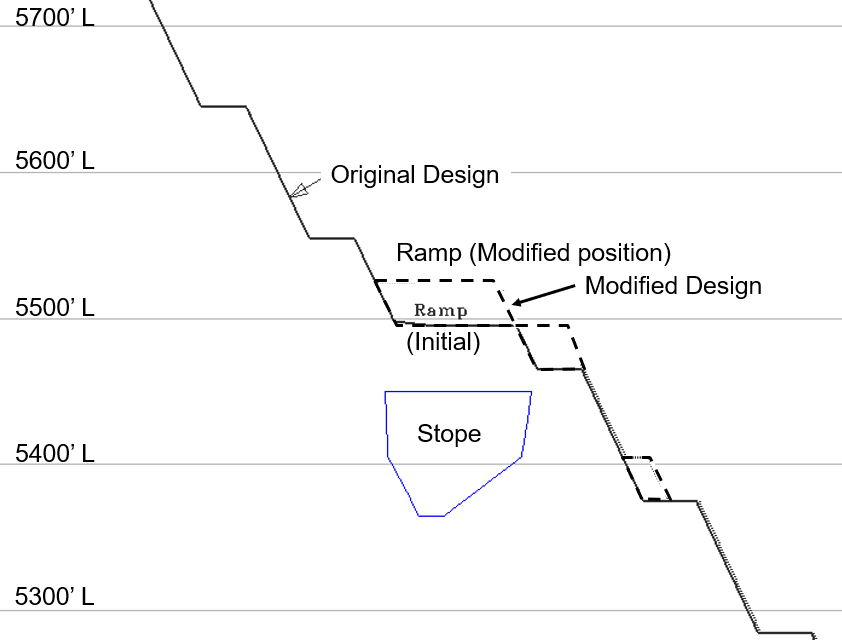
    Pit wall geometry is redesigned to minimize the impact of voids on pit wall stability. Figure 2 shows an example of pit redesign around a stope. Design measures include:
    
    
    - Stepping the final pit wall around the mine workings
    - Increasing or decreasing bench face angles and berm widths
    - Changing the ramp width or grade
    - Changing the location of the ramp (in extreme cases)
4. [  ![In blog image J Henning 2](https://www.assets.bbaconsultants.com/bba-production-assets/production/images/Publications/In-blog-image_JHenning_2.png) Figure 2. Example of highwall redesign to increase pillar dimension around a stope  ](https://www.assets.bbaconsultants.com/bba-production-assets/production/images/Publications/In-blog-image_JHenning_2.png)
5. ## Hazard awareness
    
    In addition to hazards associated with pit wall stability, subsidence is also a significant concern when working near historic mine workings. It can be triggered by ground thaw, heavy rain and nearby pit blast vibrations.
    
    Areas where subsidence is anticipated are typically identified by physical barriers (such as temporary berms) and delineator cones and pickets. Safety procedures at the mine dictate which areas can be accessed and what precautions are required.
    
    ## Conclusion
    
    The design and stability of open pits developed through historic underground workings are influenced by “typical” factors, such as rock mass and structural characteristics, and by “atypical” factors in the form of underground mine workings.
    
    To anticipate and mitigate risks, voids intersecting the pit wall and floor are identified, defined and assessed. Pit designs are adjusted around anticipated and intercepted workings, and revised designs may require ground support.
    
    If you are looking for solutions to your open pit challenges, we can help! Reach out to our rock mechanic experts.
 
This content is for general information purposes only. All rights reserved ©BBA


    1. ![John Henning](https://www.assets.bbaconsultants.com/bba-production-assets/production/images/avatars/_size_avatar/92451/John-Henning.webp)   
    
     John Henning, P.Eng., Ph.D.
    
    Principal Engineer, Mining and Geology
    
         [  ](https://www.linkedin.com/in/john-henning/)


    - [  27 Jul 2026 Mining and Metals  


     Early tailings decisions shape long-term mine performance 


    - ![Geraldine Cosset](https://www.assets.bbaconsultants.com/bba-production-assets/production/images/avatars/_size_avatar/206707/Geraldine-Cosset.webp)
    - ![Jared Purdy](https://www.assets.bbaconsultants.com/bba-production-assets/production/images/avatars/_size_avatar/212424/Jared-Purdy.webp)


      ](https://www.bbaconsultants.com/en-ca/insights/early-tailings-decisions-shape-long-term-mine-performance "Early tailings decisions shape long-term mine performance")
- [  02 Jul 2026 Mining and Metals  


     Python: A key tool for data analysis in mineral processing 


    - ![Charles Blais](https://www.assets.bbaconsultants.com/bba-production-assets/production/images/avatars/_size_avatar/211197/Charles-Blais.webp)
    - ![Juan Pablo Vergara](https://www.assets.bbaconsultants.com/bba-production-assets/production/images/avatars/_size_avatar/211266/Juan-Pablo-Vergara.webp)


      ](https://www.bbaconsultants.com/en-ca/insights/python-a-key-tool-for-data-analysis-in-mineral-processing "Python: A key tool for data analysis in mineral processing")
- [  19 Jun 2026 Mining and Metals  


     Speed is earned early in projects 


    - ![Mm employee men jean lheureux retouch web SQ LR BBA](https://www.assets.bbaconsultants.com/bba-production-assets/production/images/avatars/_size_avatar/204266/mm_employee_men_jean-lheureux_retouch_web_SQ_LR_BBA.webp)
    - ![Mm employee men benoit richard retouch web SQ LR BBA](https://www.assets.bbaconsultants.com/bba-production-assets/production/images/avatars/_size_avatar/203602/mm_employee_men_benoit-richard_retouch_web_SQ_LR_BBA.webp)


      ](https://www.bbaconsultants.com/en-ca/insights/speed-is-earned-early-in-projects "Speed is earned early in projects")
- [  17 Jun 2026 
    
     Industrial data platforms: building a solid foundation to optimize your operations 


    - ![Pierre Boucher](https://www.assets.bbaconsultants.com/bba-production-assets/production/images/avatars/_size_avatar/2671/Pierre-Boucher.webp)   
        
         Pierre Boucher, P.Eng.
        
        Senior Engineer, Operational Technology and Infrastructure


      ](https://www.bbaconsultants.com/en-ca/insights/industrial-data-platforms-building-a-solid-foundation-to-optimize-your-operations "Industrial data platforms: building a solid foundation to optimize your operations")


 [ See all 

 ](https://www.bbaconsultants.com/en-ca/insights "Go to Publications listing page") 


 Let’s  
think it further  
together [ Contact us    

 ](https://www.bbaconsultants.com/en-ca/contact) 


  Mining operators are increasingly looking into developing large open pits down through old, abandoned underground workings to extract remnant ore left within pillar zones. However, maintaining pit wall stability while mining through a large network of underground mine workings isn’t easy and has its risks that can significantly impact overall pit economics and viability.


1. The interactions between the stopes and pit walls may present operational challenges, requiring pit wall redesign, ground support installation and operational rescheduling. Anticipated interactions of the pit shell with the mine workings must also be closely evaluated to maintain a safe working environment.
    
    ## Open pit interaction with underground mine workings
    
    The interaction of the pit with previously mined stopes presents a challenge to stability design in the walls and pit floor. An example of stope exposure in the pit wall is provided in Figure 1.
2. [  ![In blog image J Henning 1](https://www.assets.bbaconsultants.com/bba-production-assets/production/images/Publications/In-blog-image_JHenning_1.png) Figure 1. Pit wall undercut by stope  ](https://www.assets.bbaconsultants.com/bba-production-assets/production/images/Publications/In-blog-image_JHenning_1.png)
3. Stopes are assessed on a case-by-case basis, with special attention given to those that may impact the pit ramp or catch benches due to their location, dimensions or compromised rock mass stability. In addition, the exact position of individual stopes may be unknown due to incomplete mine records.
    
    ## Defining voids
    
    Voids are identified and defined using a variety of sources, including historic mine plans and sections, stope records and probe drilling. Where conditions permit, larger voids are surveyed using a borehole scanner.
    
    Voids fall into three categories:
    
    
    1. Stopes and lateral or vertical mine development that will daylight or lie adjacent to the designed open pit highwall. The stability of these problematic stopes is assessed using a range of techniques including kinematic analyses, analyses of potential support demand and numerical modelling to evaluate overall stability interaction issues.
    2. Mine workings that will be intercepted by the advancing pit floor. Based on proximity to voids, the pit floor can be subdivided into non-restricted, cautionary and restricted areas to ensure personnel safety.
    3. Stopes and mine workings that lie well beyond (30 m+) the ultimate pit shell design.
    
    ## Stability design tactics
    
    Ground support or pit geometry re-design is used to establish stable wall conditions when near or intercepting historic mine workings.
    
    ### Ground support
    
    Ground support measures include:
    
    
    - Rock mass is reinforced with cable bolting or rock bolting.
    - Surface cover is used by draping screening over the wall to mitigate rock fall risk at locations where catch bench geometry has been compromised.
    - Backfill exposures are stabilized by replacing existing unconsolidated fill (typically fines or sand) with a cover of waste rock, allowing a steeper angle of repose.
    - Voids are backfilled in advance of pit mining. Depending on proximity to the ultimate pit shell, unconsolidated or consolidated backfill is used.
    - A minimum pillar dimension requirement is maintained above voids, with undersized sill pillars blasted down. In the case of large open stopes, drop raises may be used to fill the underlying void with broken waste muck prior to blasting down the sill.
    
    ### Pit wall geometry redesign
    
    Pit wall geometry is redesigned to minimize the impact of voids on pit wall stability. Figure 2 shows an example of pit redesign around a stope. Design measures include:
    
    
    - Stepping the final pit wall around the mine workings
    - Increasing or decreasing bench face angles and berm widths
    - Changing the ramp width or grade
    - Changing the location of the ramp (in extreme cases)
4. [  ![In blog image J Henning 2](https://www.assets.bbaconsultants.com/bba-production-assets/production/images/Publications/In-blog-image_JHenning_2.png) Figure 2. Example of highwall redesign to increase pillar dimension around a stope  ](https://www.assets.bbaconsultants.com/bba-production-assets/production/images/Publications/In-blog-image_JHenning_2.png)
5. ## Hazard awareness
    
    In addition to hazards associated with pit wall stability, subsidence is also a significant concern when working near historic mine workings. It can be triggered by ground thaw, heavy rain and nearby pit blast vibrations.
    
    Areas where subsidence is anticipated are typically identified by physical barriers (such as temporary berms) and delineator cones and pickets. Safety procedures at the mine dictate which areas can be accessed and what precautions are required.
    
    ## Conclusion
    
    The design and stability of open pits developed through historic underground workings are influenced by “typical” factors, such as rock mass and structural characteristics, and by “atypical” factors in the form of underground mine workings.
    
    To anticipate and mitigate risks, voids intersecting the pit wall and floor are identified, defined and assessed. Pit designs are adjusted around anticipated and intercepted workings, and revised designs may require ground support.
    
    If you are looking for solutions to your open pit challenges, we can help! Reach out to our rock mechanic experts.
 
This content is for general information purposes only. All rights reserved ©BBA