As Alberta's solar boom subsides, Ontario's next wave is just beginning
Ontario is entering a new phase of renewable energy development, with solar expected to play a growing role in meeting future electricity needs. Alberta has already been through a similar growth cycle, building gigawatts of solar capacity over the past several years. The experience revealed valuable lessons about grid interconnection, project planning and risk management that Ontario developers can apply as the next wave takes shape.
-
To discuss what Alberta learned and how those lessons can support projects in Ontario, we spoke with Scott Fleming, P.Eng., Director, Wind and Solar, and Brenden Marchewka, P.Eng., Department Manager, Solar and Storage.
What lessons from Alberta's solar boom can help Ontario prepare for its next wave of renewable development?
Scott: Alberta’s solar market expanded quickly when solar technology costs and market conditions aligned, bringing many projects into development at the same time. That growth generated a tremendous amount of experience across planning, interconnection, design, construction and commissioning. One of the biggest takeaways is that these development waves happen fast. When market conditions align, owners and developers often need to move quickly, which increases the value of having recent, practical experience available.
Ontario has been here before. During the Feed-in-Tariff (FIT) program, the province developed a significant amount of solar expertise. Over time, however, as activity slowed, much of that expertise moved into other industries, retired or migrated to new markets such as Alberta.
-
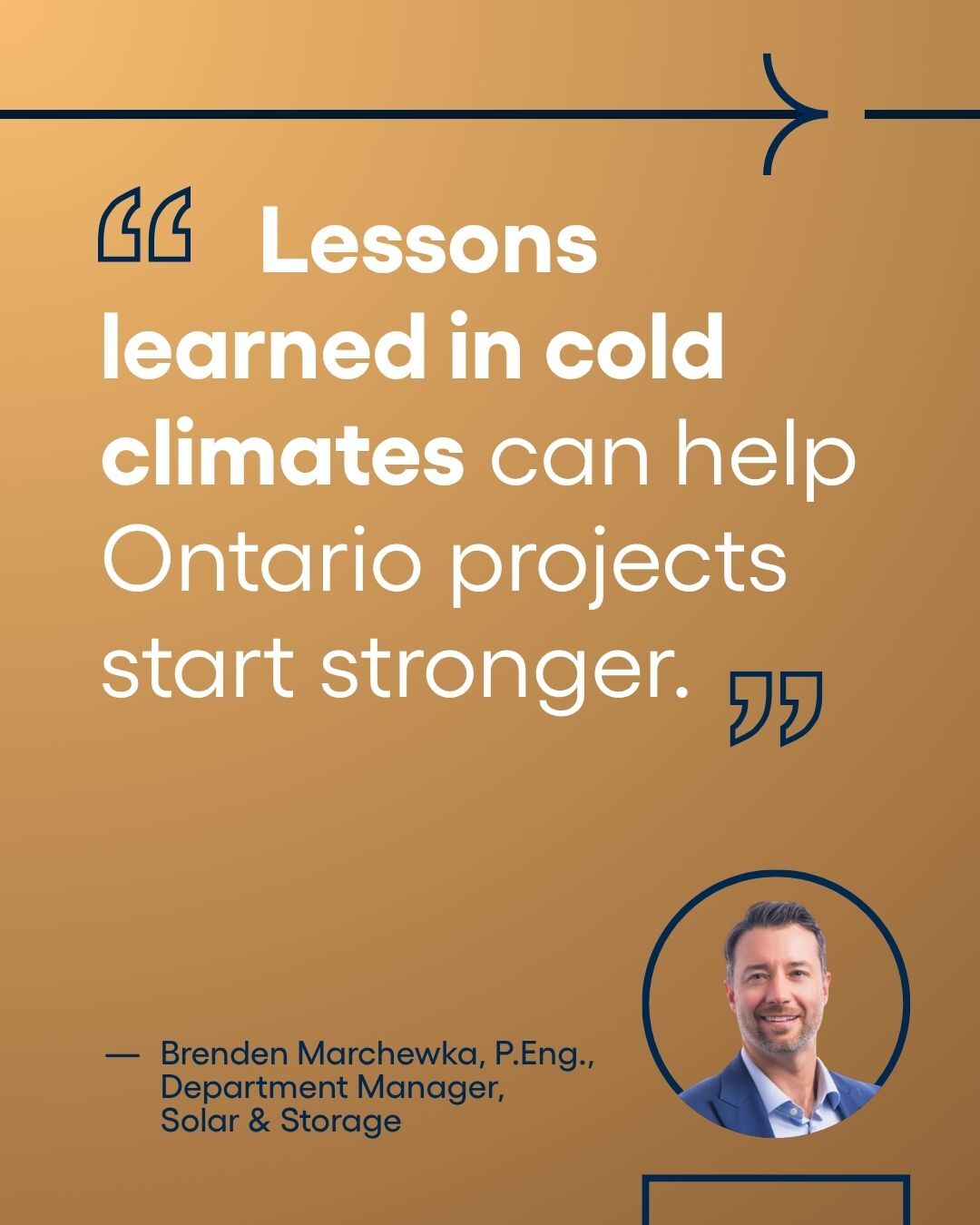
Brenden: Many of the challenges Alberta faced are directly relevant to Ontario today. Over the past several years, teams have worked through questions related to cold-climate design, tracker optimization, foundations, equipment selection, financing requirements and project delivery. Those lessons were learned on real projects that moved from development to construction and into operation.
“A lot of those lessons are fresh from Alberta and can be applied directly to the Ontario market.” — Brenden Marchewka, P.Eng., Department Manager, Solar and Storage
The industry has evolved significantly in the last decade. The technologies, project sizes, design approaches and procurement requirements being used today are very different from what many developers encountered during Ontario’s earlier solar buildout.
-
What did Alberta’s solar boom reveal about grid interconnection?
Scott: One of the most important lessons is that interconnection to the grid should be treated as one of the very first steps in project development. In Alberta, an open market structure made it relatively easy for developers to submit projects. As market conditions became increasingly positive, the number of proposed projects grew rapidly, far exceeding what the system could realistically connect.
The result was a crowded interconnection queue and increasing pressure on planners, utilities and developers. In many cases, project proponents assumed that the presence of a nearby transmission line meant they could easily connect. That assumption often proved incorrect.
-
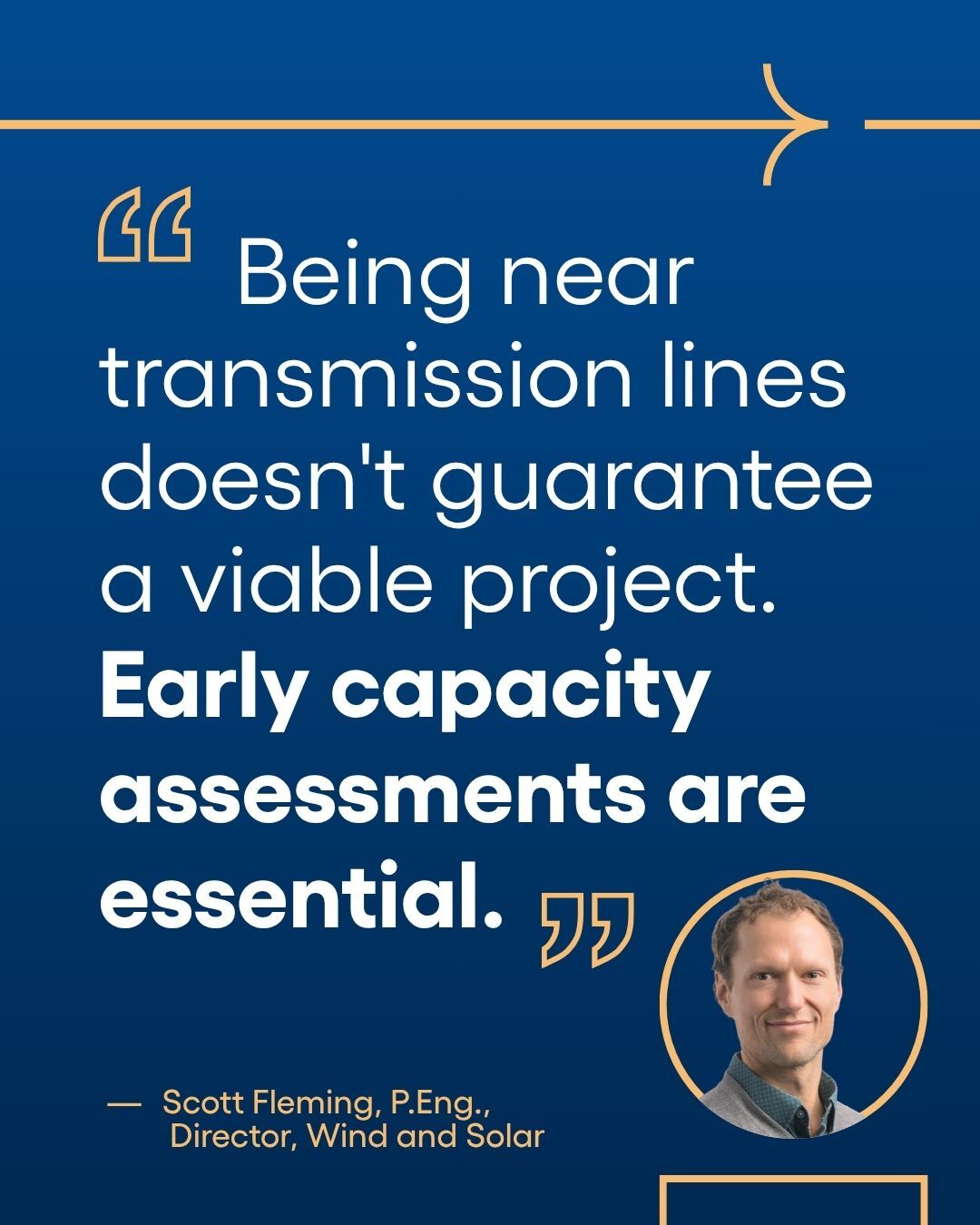
“Developers can prospect near transmission lines, but without examining available capacity early on, they can get far down the path without having a viable project.” — Scott Fleming, P.Eng., Director, Wind and Solar
Developers learned that moving ahead with land, environmental and stakeholder activities before confirming available capacity at the preferred connection point, or assessing congestion and curtailment risks, could mean overlooking a potentially fatal flaw.
Ontario’s Long-Term 2 (LT2) process does include a transmission grid capacity assessment. However, it takes place during bid evaluation, which is often too late to mitigate risk or optimize project siting effectively and develop a project before an LT2 procurement window opens. Conducting the same grid capacity assessment that the Independent Electricity System Operator (IESO) will use to evaluate LT2 bids as an early-stage development step is therefore critically important.
-
Brenden: The process itself has become increasingly complex. Over time, requirements have evolved, studies have become more detailed and developers are now expected to make key decisions earlier in a project's life cycle.
The lesson for Ontario is not simply that interconnection is difficult. It’s that interconnection shapes many other project decisions. Grid constraints can influence site selection, project sizing, equipment choices and commercial viability.
How can developers improve their chances of success before a project even reaches the interconnection stage?
Brenden: Based on what we've seen across Alberta's solar buildout, we strongly recommend investing in the early stages of project development. Too often, developers move directly into procurement or pricing discussions before they’ve fully defined what they’re building. That approach can create costly surprises later in the project life cycle.
“A relatively small investment during development can go a long way toward reducing uncertainty and avoiding costly surprises later in the project.” — Brenden Marchewka, P.Eng.
Our team recommends completing targeted front-end engineering design (FEED) early in the process. This may include geotechnical investigations, technology evaluations, preliminary design studies and project optimization assessments. These activities help reduce uncertainty and provide a clearer understanding of costs, constructability and long-term performance.
Scott: The first question should often be whether a project can connect where the developer intends to build it. Understanding grid capacity and deliverability early helps avoid pursuing sites that may face fundamental limitations later on.
From there, developers can evaluate other factors such as land, environmental conditions, community considerations and project economics.
The broader lesson from Alberta is that successful projects rarely begin with assumptions. They begin with informed decisions. The more clarity a developer has about capacity, technology and project requirements, the fewer surprises they’re likely to encounter as development progresses.
What should Ontario developers do next?
Ontario's next solar wave will bring opportunities, some new and unique challenges and many of the same issues Alberta has faced in recent years. Fortunately, those experiences have provided valuable lessons for the industry.
Owners who assess interconnection capacity early, invest in upfront project definition, reduce uncertainty and optimize project configuration and technology selection before making major commitments will be better positioned to move projects forward.
With a strong presence in Ontario and firsthand experience gained through Alberta's recent solar buildout, our team is applying these lessons to help clients make more informed decisions from the earliest stages of project development.
This content is for general information purposes only. All rights reserved ©BBA