Jul 27, 2026

Early tailings decisions shape long-term mine performance

  • Article
Effet Inge Early tailings

Tailings management is often viewed as a downstream requirement of mining operations. In practice, decisions about tailings influence project design, water management, long-term liability and operational flexibility long before production begins.


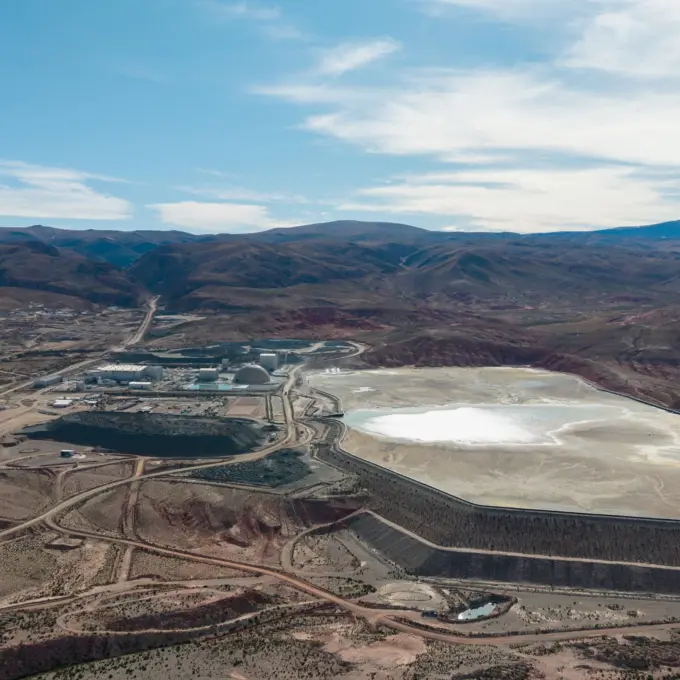
For decades, the priority was simple: ensure there was somewhere to store material leaving the plant. Today, that mindset is changing. Tailings are increasingly recognized as one of the most significant long-term risks on a mining site. Their impact extends far beyond operations, influencing future closure obligations, water stewardship, future land use and relationships with surrounding communities. Early decisions can shape those outcomes for decades.


Below, Geraldine Cosset, P.Eng., Department Manager, Tailings and Geotechnical, and Jared Purdy, P.Eng., Principal Engineer, Civil and Geotechnical, discuss three questions that are reshaping how mining companies think about tailings management.

  1. When should tailings management be brought into a mining project, and why does timing matter?

    Geraldine Cosset: It’s happening earlier than it used to. Early development of tailings management strategies is often driven by CAPEX and OPEX considerations. Closure and long-term management don’t always carry the same weight at that stage but should taken into account during the design process (design for closure). 


    One of the realities is that tailings facilities remain long after mining operations have ended. Companies must manage them and most of the time for many years. 

  2. “When tailings considerations are introduced too late, they tend to become constraints that are costly and difficult to address later in the project life cycle. — Geraldine Cosset, P.Eng., Department Manager, Tailings and Geotechnical

  3. Jared Purdy: Exactly. For a long time, the industry took a reactive approach. As long as the mill had somewhere to send tailings, there was limited focus on what happened beyond operations. Today, industry standards and regulatory expectations (such as NI 43101 and the GISTM) place greater emphasis on storage methods, facility design, safety and long-term performance. 


    Events over the past decade have also reinforced the importance of proactive planning. More clients are recognizing the value of integrating tailings into project decisions from the outset, because waiting too long limits options and increases risks. You can’t afford to delay tailings management decisions.

  4. How does water management change the equation?

    Geraldine Cosset: Water is at the centre of many tailings-related risks, linking technical performance, environmental protection and community safety. Even in regions where facilities are designed more rigorously today, legacy sites located upstream of communities continue to demand close management and oversight.


    At the same time, the operating environment is changing. Regulatory expectations keep tightening, and climate events that were once considered rare are becoming more frequent. As a result, some facilities that met design criteria years ago may require reassessment and adaptation to remain aligned with today's realities.

    Jared Purdy: From a geotechnical standpoint, tailings are a complex material to manage. Tailings don’t behave like conventional solids. In many cases, they behave more like a fluid and that condition can persist over time.


    People often compare a tailings facility to a water dam, but there’s an important distinction. In a water reservoir, operators can often reduce water levels when conditions change. With tailings, that flexibility is much more limited. The design, operation and monitoring systems must perform as intended throughout the facility life cycle because there are fewer corrective options once the material is in place.


    When seepage, groundwater interactions and water chemistry are added to the equation, the challenge becomes broader than engineering alone. 


    Depending on where a facility is located, water management can directly affect downstream users, local communities and Indigenous groups that rely on the same watershed. In that sense, water stewardship isn’t only a technical issue. It’s closely tied to risk management, environmental performance and stakeholder trust.

  5. What changes when you actually integrate tailings into the project?

    Jared Purdy: It stops being uniquely a geotechnical design component. You incorporate process engineering, metallurgy, geochemistry, hydrogeology and water management into the process. Decisions made upstream significantly influence what happens at the tailings facility. When these connections aren’t made early, projects often inherit constraints that could have been avoided.


    Integration also expands the conversation beyond technical teams. Regulators, communities, Indigenous groups and other stakeholders increasingly expect transparency around how facilities are designed, operated and monitored. Tailings management is no longer only about engineering performance. It’s also about building confidence that risks are understood and managed responsibly.

  6. “Mines may come and go, but communities and their environment remain. They are the long-term stakeholders, which is why transparency and responsible management have become such an important part of tailings planning.” — Jared Purdy, P.Eng., Civil and Geotechnical

  7. Geraldine Cosset: Absolutely! That evolution also depends on people. Across the industry, many experienced tailings specialists are approaching retirement, and there aren’t enough engineers entering the field to replace them.


    If the industry wants to continue improving how tailings are planned, designed and managed, it needs people who are interested in tackling these challenges and developing new approaches. Without that expertise, it becomes much harder to move beyond existing practices.


    At the same time, some of the biggest opportunities come from greater collaboration across disciplines. The earlier different perspectives are brought into the conversation, the more options companies have to reduce risk and improve long-term outcomes.

  8. Tailings as a long-term decision


    Tailings don’t leave when operations end. The facility remains and so does the responsibility that comes with it. 

    The most effective tailings strategies aren’t only defined by how tailings are stored but by proactive decisions early in the design process that support safer operations, responsible water stewardship, stronger relationships with communities and decreased long-term risks.

    In that sense, tailings management begins long before the first tonne of material reaches the facility.

This content is for general information purposes only. All rights reserved ©BBA