Mar 18, 2026

AI is first and foremost a human transformation

  • Article
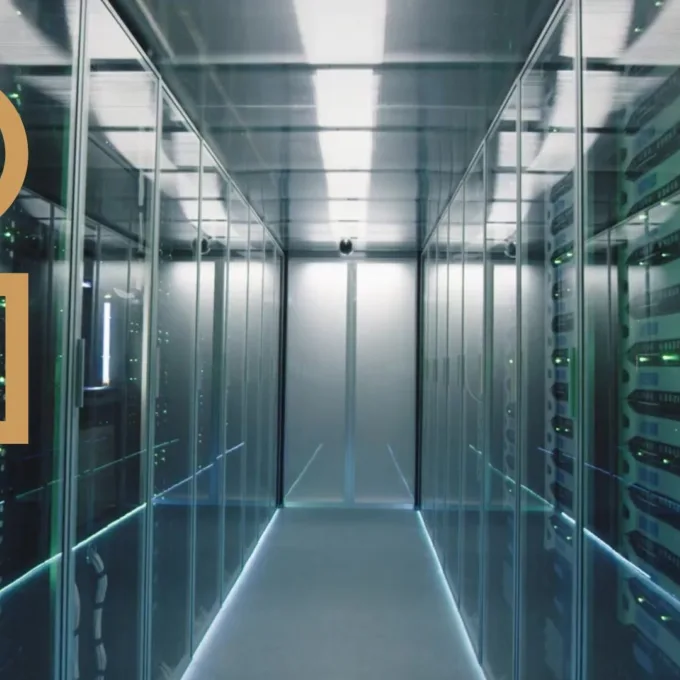
Digital data center equipment ingenuity effect ai web HZ HR bba
  1. Artificial intelligence has rapidly evolved from a promising innovation into a major strategic transformation for organizations. Across industries, it is reshaping how decisions are made, how operations are managed, and how expertise is applied, opening new opportunities to improve performance, resilience, and competitiveness.

    In industrial environments, AI promises productivity gains, improved operational reliability, more refined asset management, and faster decision-making. Yet despite the enthusiasm, many organizations still struggle to translate experimentation into tangible value. Across sectors, companies are actively exploring AI through pilot initiatives and targeted use cases, but few have reached large-scale operational deployment — revealing that the real challenge is not technological adoption, but organizational readiness.

    “Integrating AI without deep transformation may automate existing processes at best, but it will not create a sustainable competitive advantage,” explains Mark Yep, Strategic advisory leader – Digital transformation at BBA.

    Beyond technology itself, AI is encouraging organizations to rethink how decisions are made, how expertise is deployed, and what leadership looks like in increasingly autonomous environments. While the rapid rise of generative AI is opening the door to many new possibilities, its successful adoption in industrial contexts ultimately depends on leadership, change management, and organizational culture. 

  2. Trust before algorithms

    “Resistance to change is rarely about the technology itself,” explains Julie Butcher, Strategic Advisory leader - Leadership, Change and Culture at BBA. “It is about what people believe it will take away from them.”

    In today’s context, where automation increasingly touches expert judgment and planning activities, these concerns are becoming more visible at every level of the organization. In industrial environments that are often hierarchical and built around field expertise, AI can raise legitimate questions: loss of role clarity, dilution of skills, and challenges to professional judgment.

    In many organizations, AI adoption is advancing faster than workforce preparation, leaving teams expected to adapt to new tools without a clear evolution of roles, skills, or decision frameworks.

    “That’s why transparency becomes strategic. Organizations must clearly demonstrate what AI will concretely improve, what will not change, how teams will be supported, and which new capabilities will be developed,” adds Julie Butcher.

    Most importantly, companies must remember that implementing technology does not correct an organizational model that inhibits innovation. A culture capable of navigating ambiguity, experimenting, and learning quickly is a decisive factor for success. 

  3. Turning intention into measurable performance

    In sectors such as mining, energy, and heavy industry, some organizations are already exploring highly autonomous operations, from self-optimizing processes to remotely operated production environments, driven as much by safety and workforce constraints.

    “In industrial environments, predictive AI is already well established in maintenance, asset management, autonomous vehicles, machine vision, and process optimization,” notes Mark Yep. “What these applications teach us is that no AI system performs without reliable data, disciplined processes, and strong professional judgment. AI can accelerate analysis, but humans remain responsible for decision-making.”

    Across industrial organizations, experience shows that scaling AI successfully requires robust data ecosystems and governance models capable of supporting increasingly autonomous decision systems.

    In many industrial sectors, AI is also becoming a lever to address the shortage of specialized talent. It is no longer only about optimization; it is about sustaining operational capacity and competitiveness.

    To succeed, organizations must act on two fronts simultaneously. 

    At the strategic level

    • Clearly define what AI is expected to improve
    • Prioritize high-impact operational use cases
    • Build a realistic and measurable business case
    • Plan organizational adoption, not just technical deployment

    At the operational level

    • Ensure data is reliable and properly structured
    • Adapt processes before automating them
    • Clarify roles between automated systems and human expertise
    • Securely integrate AI into critical operations 

    The organizations creating value from AI today are not necessarily those with the most advanced algorithms, but those aligning strategy, governance, data, and people around a shared transformation agenda.

    It is this alignment between vision, culture, and execution that enables industrial organizations to turn AI into a true performance lever.

    The question is no longer whether AI will transform industrial organizations — it already is. The real challenge is whether companies will transform themselves fast enough to to turn it into a lasting competitive advantage.

    And what if the true challenge of industrial AI were not technological, but organizational? 
  4. AI is first and foremost a human transformation 

This content is for general information purposes only. All rights reserved ©BBA