-
01 Jun 2026All industriesWhen the schedule is the client’s top priority
-
-
07 May 2026Mining and MetalsDesigning mining plans that evolve
-
-
18 Mar 2026All industriesAI is first and foremost a human transformation
-
-
04 Mar 2026All industriesRestoring together: a comprehensive approach to wetland and waterbody planning
-

Marie-Claire LeBlanc,
Environmental Professional
-
Dec 03, 2025
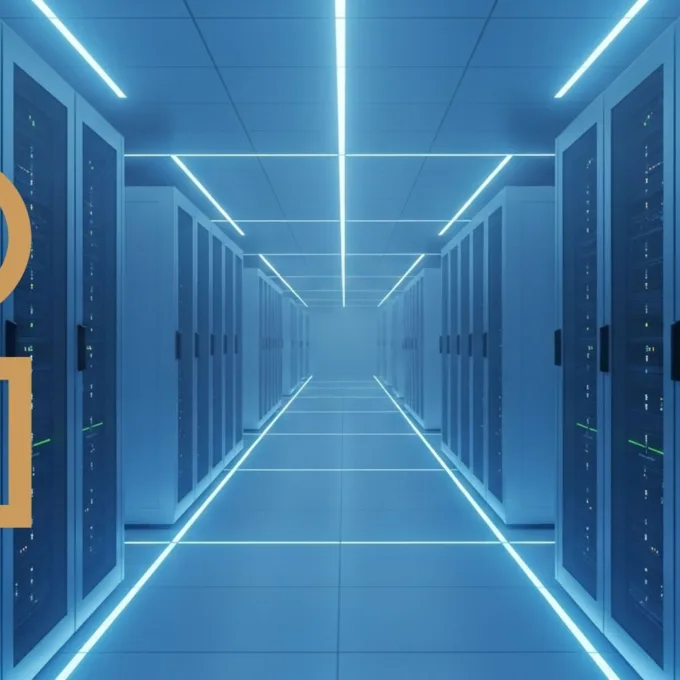
Data centres serving communities
-
In Canada and beyond, data centers are receiving renewed strategic attention due to the rapid rise of AI, a technology that demands massive computing capacity and robust digital infrastructure.
The growing pressure on access to reliable, low-carbon electricity has led many governments and energy agencies to elevate data centers as strategic economic infrastructure, recognizing their structural role in competitiveness and innovation.
This shift in narrative marks a true paradigm change. We are no longer speaking solely about IT infrastructure, but about digital sovereignty, economic resilience, and collective innovation capacity. Data centers are becoming anchors for future technology ecosystems and societal efficiency.
Their design has also evolved significantly. Today’s data centers are:
- less constrained by geographic and land positioning,
- larger and denser in computing capacity
- at the hearth of technological edge,
- increasingly strategic and complex.
With this evolution comes growing responsibility. As these facilities multiply and increase in scale, it becomes essential to design them as assets that deliver tangible benefits to communities and local economies, including thermal generation.
Turning heat into a local resource
These installations are energy-intensive and produce substantial usable heat, with above 60% of their energy consumption that can be turned into a heat source for many uses. With proper governmental and private sector coordination, that heat can be captured and repurposed to supply public buildings, greenhouses, industrial processes, or even residential districts.
“Residual heat is a high-value local resource. With the right contextual analysis, it becomes possible to build an energy-reuse loop and transform heat into a circular resource… and sometimes the solutions can be surprisingly creative” explains Yves Bétournay, Principal Electrical Engineer.
Designing a data center as a regional asset
For such a project to be meaningfully integrated into the local economic fabric, it is essential, from the earliest design phases, to:
- understanding local realities (energy, zoning, industry, workforce),
- working collaboratively with municipalities,
- planning electrical capacity responsibly,
- anticipating impacts beyond the footprint of the site.
“A data center can become a true regional asset when it is conceived in interaction with its environment, not in isolation,” explains Scott Fleming, Director, Wind & Solar Energy.
Turning a project into a local economic driver
A modern data center represents a major investment, but to generate real local value, it must be strategically designed and planned.
This includes:
- integrating a local-benefit framework,
- prioritizing regional suppliers and businesses during construction and operation,
- enabling the presence of related sectors (cybersecurity, cloud services, connectivity, applied AI),
- planning workforce development in collaboration with educational institutions,
- establishing a structured relationship with local government,
- embedding the data center within a broader regional development vision.
In this model, engineering plays a central role. It translates economic objectives into technical decisions, i.e. site layout, power systems, connectivity, servicing, and more.
Strengthening networks and connecting regions
Deploying this type of infrastructure, particularly those designed for AI workloads, drives improvements to electrical networks, increases fiber-optic density, and boosts regional digital resilience. Less constrained by latency, these platforms can be located outside major hubs, enabling greater digital accessibility and more balanced economic development across regions.
To fully deliver on this potential, certain conditions must be met:
- planning electricity capacity in harmony with existing networks,
- aligning fiber-optic expansion with future societal needs,
- anticipating specialized workforce availability,
- integrating data centers within regional strategic planning.
Designing with and for communities
Data centers will continue to grow in number. The key question is not only where they are built, but how they are designed. It is this responsible and integrated vision that engineering must carry forward.
”Nowadays, we need local data centers as much as power lines to fuel our economy, both are tools to success”, explains Yves Bétournay, Principal Electrical Engineer.
Can data centers be integrated infrastructure that generally serves communities? Yes, with proper knowledge and intention.
This content is for general information purposes only. All rights reserved ©BBA